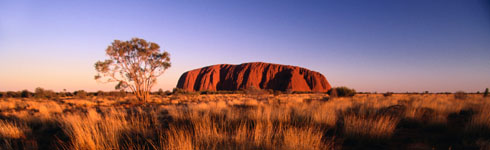
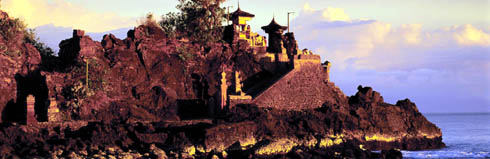
Juche – a simple name for a nasty idea. Kim Il Sungism

Jodie Foster, Pregnant Man, Iran, Prince Philip, Brad Pitt, Angelina Jolie, American Idol, Obama, China, Beyonce, Rolling Stones. (sorry for the deception but please read below)

Normally I wouldn’t bother to cover this but since it’s on the list I felt I needed to “dis” it as much as I could. I even took the time to get Buzzes top searches for the week to punch it up a bit. I even checked every category Energy Tough Love has to publicize this human indignity. The list of “Religions” that I used to start this meditation on the relationship between Religion and the Environment placed Juche well down on the list but with 18 million adherents that still alot of folks. I had never heard of it before and I even asked a couple of people if they had heard of it. Imagine my suprise when I typed it into a search engine and up popped this Prick who claimed he was god:

www.dictatorofthemonth.com

kim.jpg

During his lifetime he forced millions of people in North Korea to worship him. Can you imagine anything more degrading or disgusting then a man who points a loaded gun at your head and demands that you treat him like a god. You must pray to him. Oh most Divine Leader. Makes me want to puke. But then he is followed by this buffoon:

www.beconfused.com

jong.jpg

Now they are “worshiping” something no better than a trained monkey. If they had an ENVIRONMENTAL group in North Korea, I wish them the best of luck but I ain’t gonna publish it. I ain’t even gona type it into a search engine. If anybody ever deserved to get a nuke shoved up his poop shoot. This would be it.

Weird Bird Friday – Never for-get the Bird

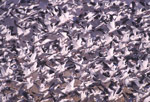
TGI(WB)F! Our mantra for Fridays is if we save a bird we save ourselves. This is really a beautiful bird moment. But in a world made dreary by pollution…sometimes beauty is weird.

wgeese2tl.jpg

As you can see I still have not conquered the sizing problem nor the citation problem, but this is a picture of geese taking off in the bright morning light.

http://images.google.com/imgres?imgurl=http://images.jupiterimages.com/common/detail/56/02/23380256.jpg&imgrefurl=http://www.jupiterimages.com/itemDetail.aspx%3FitemID%3D23380256&h=165&w=250&sz=26&hl=en&start=60&tbnid=4zVw0b1TjYuiLM:&tbnh=73&tbnw=111&prev=/images%3Fq%3Dgeese%2Btaking%2Bflight%26start%3D54%26gbv%3D2%26ndsp%3D18%26hl%3Den%26sa%3DN

geese.jpg

This a more dramatic version of the same thing.

Sikhism and the Environment? I got my doubts.

I may be wrong but after yesterdays frustration I am coming to the realisation that maybe there is an enabling level of adherents. That is maybe there is a threshold of the number adherents to a religion reached before they take on “side issues”. But it also could be an access to technology issue. Maybe the ATR’s don’t have easy access to the web. Whatever the reason I found not one (bumpkis, nada, zero zilch) African Traditional Religious groups involved in Environmentalism. If I strike out today, I may be done with religion for now. 

Sikhism (IPA: /?si?k?z?m/ or /?s?k-/ ; Punjabi: ?????, sikkh?, IPA: [?s?kk?i?] ), founded on the teachings of Nanak and nine successive gurus in fifteenth century Northern India, is the fifth-largest religion in the world.[1] This system of religious philosophy and expression has been traditionally known as the Gurmat (literally the counsel of the gurus) or the Sikh Dharma. Sikhism originated from the word Sikh, which in turn comes from the Sanskrit root ?i?ya meaning “disciple” or “learner”, or ?ik?a meaning “instruction.”[2][3]

The principal belief of Sikhism is faith in V?higur?—represented using the sacred symbol of ?k ?a?k?r, the Universal God. Sikhism advocates the pursuit of salvation through disciplined, personal meditation on the name and message of God. A key distinctive feature of Sikhism is a non-anthropomorphic concept of God, to the extent that one can interpret God as the Universe itself. The followers of Sikhism are ordained to follow the teachings of the ten Sikh gurus, or enlightened leaders, as well as the holy scripture entitled the Gur? Granth S?hib, which includes selected works of many devotees from diverse socio-economic and religious backgrounds. The text was decreed by Gobind Singh, the tenth guru, as the final guru of the Khalsa Panth. Sikhism’s traditions and teachings are distinctively associated with the history, society and culture of the Punjab. Adherents of Sikhism are known as Sikhs (students or disciples) and number over 23 million across the world. Most Sikhs live in the state of Punjab in India and, prior to the country’s partition, millions of Sikhs lived in what is now known as the Punjab province of Pakistan

Then again maybe I was wrong. I found this neat site and it lists Jains and the B’hai as well so I will be at it for a couple of days at least.

http://www.arcworld.org/faiths.asp?pageID=57

 But first the Pretty Pictures

banner_main_image.jpg

Way to go Punjabians.!.

Realisation of Truth and Truthful Living for all.
>

Do Traditional/Diaspora Religions of Africa Sponsor Environmental Groups?

This such an overwhelming topic at one level that I feel inadequate. At another level, its a simple question? Are there any?

Africa is home to the first Human, the first Library, the first University and the first Art Gallery. Does African Tradional Religion currently involve itself with Environmentalism? 

http://www.afrikaworld.net/afrel/


 1. Introduction

In many African societies ancestral veneration is one of the central and basic traditional and even contemporary forms of cult. As is indicated by the title, this essay intends to expose briefly the main features of that type of veneration in black Africa, South of the Sahara.

2. Ancestral cult in Black Africa

African ancestral cult is deeply rooted in the African traditional worldview so much so that a proper and adequate understanding of that cult cannot be achieved without examining it in its intimate link with such worldview. Hence, before exposing the main features of ancestral veneration, it is useful to give first a brief survey of the African traditional worldview, in the light of which the former will and should be envisaged.

2.1 Brief Survey of African Traditional Worldview

As can be gathered from anthropological and ethnological data most of the elements found in the African worldview can be reduced to four main headings:

2.1.1 Dynamism and vitalism, comprising an existential, concrete and affective way of approach. Reality is seen and judged especially from its dynamic aspects closely related to life. The farther a being is from these elements, the more unreal and valueless it is conceived to be. Hence the emphasis on fecundity and life, and the identification between being and power or vital force. Indeed, the ideal of the African culture is coexistence with and the strengthening of vital force or vital relationship in the world and universe. Above all forces is God, who gives existence and increase of power to all others. Next come the dead of the tribe who, thanks to their transition into the other world, are endowed with special powers. The living form a hierarchy according to their power. The different manners of being are distinguished by their mode and degree of participation in the Supreme Force (God) and in superior forces of other “spiritual” beings.

The craving for power, safety, protection and life is the driving force in the African religion. This craving originates not so much from logical reflection, but from a feeling of incapacity and an obstinate desire to overcome it. Many individual needs are believed to be satisfied by dynamism and spiritism. Amulets and talisman are vehicles of vital energy. This ethic is based on the belief that every act and custom which strikes at the vital force, or at the growth and hierarchy of man is bad. What is ontologically and morally and juridically just is that which maintains and increases the vital energy received from the life-Giver, the Creator of force and the Fount from which all forces flow and are under His control.

http://afgen.com/vodoun.html


 Animals are sacred in African Religions, and are used (as in ancient Biblical, Hindu and Holy Koranic texts) as offerings to our gods and ancestors in both our healing, initiation, and atonement ceremonies.  Additionally, contrary to the Hollywood hype, animals are not the focus nor the center of our ceremonies.  They are merely consecrated offerings, made sacred for communal meals by the initiate, to share with their gods and ancestors.  The “rituals” surrounding this routine event are no more spectacular than the preparation of foods and farm animals for a family meal, or the Jewish ritual of kashrus (Kosher slaughtering) in making an animal sacred for offerings and consuming.  Animal offerings are a sacred, humane, and essential religious rite that has been in practice in many cultures all over the world for thousands of years, even up until the present.  

For example, because all aspects of African ritual and religious practice has been routinely demonized and maligned, few realize that their ritual practices are no different than (for example) the animal offerings used in tantric yoga.


http://www.ingentaconnect.com/content/brill/exch/2006/00000035/00000002/art00003


HOW ENVIRONMENTAL IS AFRICAN TRADITIONAL RELIGION?

Author: Nisbert Tarringa

“…about the Shona religion of Zimbabwe…At a theoretical level a romantic view of Shona attitudes to nature, it is possible to conclude the Shona traditional religion is necessarily environmentally friendly. The strong belief in ancestral spirits (midzimu) pan-vitalism, kinship, taboo and totems have the potential to bear testimony to this…I argue that the ecological attitudes of the African Traditional Religion more based on fear or respect of ancestral spirits than on respect for nature itself”

But what about actual organizations or web sites?


http://library.stanford.edu/africa/eco.html


This site lists 170 literature or organizations that do conservation work in all of Africa, and I am sure that there are a lot more organizations out there that this site does not list

.

This web site starts with a prayer but it is Christian in nature:


http://waado.org/Environment/EnvironmentPage.html


After 6 hours of looking the closest I could get was something like this:


http://www.awish.net/Africa/ecogarden.htm


eco_garden3.jpg


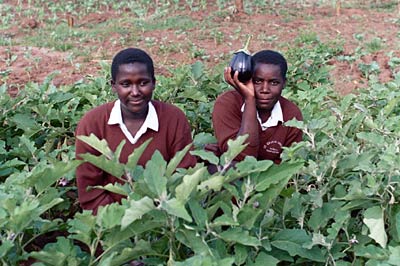
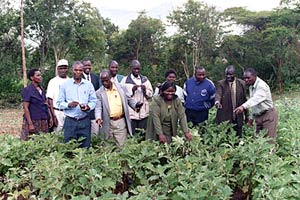
Eco-Garden Kenya


 Project Summary

Eco-garden is a community based organization dedicated to educate the people of Kenya by mobilizing and working with communities to sustainably use, manage, and conserve natural resources for the benefits of current and future generations. Eco-garden integrates food production and gardening within the principles of nature in ways which preserve the holistic functions of ecosystems and the existence of biological diversity

Environmental conservation and organic gardening projects are facilitated specifically to provide technical knowledge to community groups developing on-farm and on-site conservation practices by sustainably using natural resources such that they will be available for both wildlife and human generations in the future. Eco-garden has taken the challenge to educate these communities about the values of their remaining natural resources (wildlife, fertile soil, patchy indigenous forests, and wetlands). The project targets farmers, women and youth groups, and young farmers’ clubs in both primary schools and high schools. Because the transfer of knowledge and information from government agencies (Ministry of Agriculture) has collapsed, farmers are left on their own, and no environmental conservation classes are offered in schools. Therefore, by working with school kids, Eco-garden hopes the students will pass the information to their parents. Lastly, the project aims to educate and encourage local groups to provide future training to community members through hands-on practical approaches and participatory planning.

eco_garden1.jpg

May Your Journeys Be Smooth 

Primal/Indigenous Religious Environmental Groups – Why do I think I am in over my head?

primal-indigenous: 300 million

Let me start by saying that this is a real tough topic because most religions of this type make no distinction between a person and a place. Thus they could be inherently environmental BUT. There is a strain of this way of thinking that argues that Skyscrapers are just as natural an extention of Gaia as are termite colonies. So beware:

http://staff.jccc.net/thoare/primal.htm

Some Basic Concepts in Primal Religion

Some Basic Concepts

  • Unity of experience: The primal world is not fragmented but remains whole as a symbolic paradigm of the sacred. There is no perceived division between the physical and the spiritual. The physical can indeed be a channel for the spiritual, as opposed to something “corrupt” that stands in opposition to it. In contrast, recall my use of the expression “the divorce of Mom and Dad” in regard to Western religious consciousness. Divine worship, therefore, would not be regarded as an activity to be separated or isolated from other activities. Life as lived is a sacred “activity” in and of itself. One worships as one breathes.
  • Place (“Not available for export”): What is the difference between “space” and “place?” Place is space with a line drawn around it. The physical location of the community is the spiritual pivot of the universe. The primal consciousness is identified with the earth in this particular place. In other words, one’s physical place is one’s spiritual base (consider the Native American crisis of relocation, e.g., the Cherokee nation). Compare this with the Western emphasis upon “history as destiny.”
  • Orality (“Tell me a story”); Where should story dwell? Where do ancestors live? In the soul or in a text? There are advantages and disadvantages to each. Whoever said “Sticks and stones will break my bones but names will never hurt me” did not know what he was talking about. Words have life and breath. Stories may change and evolve, but they are always relational events (“And then what happened?!”). Texts, on the other hand, preserve story, tradition, information, etc. as a constant. But how often do we go read them? We often seem content simply to know they are over there safe and sound (i.e., in the library).
  • Time: in relationship to the characteristics articulated above, time is better thought of as “timelessness.” In the West or in technological cultures, time is linear. This implies that time and history are “going somewhere,” i.e., in fulfillment of a destiny or purposefulness. Primal time is not linear but eternal. “Eternal” does not mean “forever,” as the idea of forever is in itself linear (i.e., going on and on). Eternity simply “is.” This “isness” or beingness is the stable, unchanging backdrop within which the gods and ancestors simply “are.” It is encountered in any number of ways, such as dreams, shamanic ecstasy, mask performance, etc. Primal people may indeed speak of “the Past,” but this should be understood not as chronological but causal: the past is not “back then” but closer to the original Source of things. This relates once again to the primacy of “place” as something eternal and central.
  • Ritual enactment: each of the above ideas is present in what one enacts. Rituals and rites of passage are rehearsals or performances of the original creative act. Creation, therefore, is not a chronological event that took place “back then,” but an ever-presentness. Ritual enactment keeps one in touch with that presentness as an eternal reality.
  • Related closely to ritual enactment is the concept of liminality. From the Latin limen, meaning “threshhold” or “entryway,” liminality refers to the ritual state of transition in a rite of passage, wherein the initiand is in a condition (or non-condition) of ambiguity or “between two worlds.” He or she is in the midst of the process of leaving something old and becoming something new. Compare this to, for example, the contemporary process of engagement and marriage. The period of time between “Will you marry me?” and “I do” can last for months, and it is often filled with confusion and chaos. The partners-to-be are not married yet, but they are not single, either. They are in a liminal state of ambiguity in which they are, in a sense, non-persons, until they re-emerge on the other side as husband and wife. This is why a bride is traditionally “carried over the threshhold” on her wedding day. A similar custom is that in which both partners jump over a pole, such as a broom handle, that is extended out in front of the couple at about ankle height.

>
>
Harvard Comes Shining through again. But then this is what you would expect from the place where Ralph Waldo Emerson taught. First the pretty picture:  

http://environment.harvard.edu/religion/religion/indigenous/links.html

ayers_rock.jpg

Alaska Native Knowledge Network
Centre for Indigenous Environmental Resources
First Nations Environmental Network
Honor the Earth
Indian Trust Management Information
Indigenous Agricultural and Environmental Knowledge Systems
Indigenous Environmental Network
Intertribal Environmental Council
National Environmental Coalition of Native Americans
National Laws and International Agreements Affecting Indigenous and Local Knowledge (article)
National Tribal Environmental Council
Native American Fish and Wildlife Society
Native Americans and the Environment
Native Web Resources
Pluralism Project
Worlds Indigenous Womens Foundation

Alpha Institute Indigenous/Environmental Links
Acre Amazon Link
Center for Indigenous Environmental Resources
Center for World Indigenous Studies
Elders and Graduate Level Educators
Taiga Rescue Network
Pictish Nation
Unrepresented Nations and Peoples Organization (UNPO)

Akwesasne (Mohawk) Task Force on the Environment
Cherokee Nation
Choctaw Nation of Oklahoma
Comunidades Indigenas de los Altos de Chiapas
Dine CARE (Navajo environmental organization)
Mohawk Nation Council of Chiefs
Muscogee Creek Nation
Occaneechi Band of the Saponi Nation
Oneida Indian Nation
Operation Amazonia Nativa
Organization of the Indigenous Peoples from Tarauacá and Jordão (Amazon)
Zapitistas

Constitution of Iroquois Nation

Lakota Links Page

University of Texas: Lanic (Indigenous Peoples in Latin America) Resources
Native American Indian Resources
Resources on Aztec and Mayan Law
Traditional Ecological Knowledge Database

And This Note Before We Leave China for the Primal – Indigenous Religions, whatever the heck that is?

primal-indigenous: 300 million

http://www.eeo.com.cn/ens/Observer/2008/02/29/92990.html

 AGRICULTURE

China’s massive but dwindling aquifers would be on track to run virtually dry if over-pumping continued, said Lester Brown, prominent US environmental policy advocate. At that point, its grain production would dive, severely exacerbating any food price increases that had already accumulated. Without rationally priced water, Brown predicted this scenario and a severe global food shortages as inevitable.At once an ecologist, author, farmer, and activist, Brown was one of the earliest pioneers of the modern environmental movement. He had worked in various capacities for the US Department of Agriculture, ultimately becoming the director of the International Agriculture Development Service in 1966. In 1974 he founded World Watch, a non-profit devoted to global environmental issues, and in 2001, the Earth Policy Institute.In 1995, Brown wrote a book entitled “Who Will Feed China?”, prompting worldwide attention and fierce debates in China on its role in affecting global food security.As part of the EO focus series on China’s rising food prises, Brown discussed with us the greater ecological significance in agricultural production.The key, he said, would be water.

As a bonus Austin Arensberg also lists a group of Chinese Energy Advocate Groups

WOOHOO I love this guy now if he would just cover the Sikhs, the Jains and all the rest that I have as yet to do…

http://www.austinarensberg.com/?page_id=313

China Energy Conservation Association

Gansu Province Solar Home System Project

http://www.nrel.gov/international/china/gansu_pilot_project.html
South-North Institute for Sustainable Development
http://www.snisd.org.cn
Global Village Beijing
http://www.gvbchina.org/
Energy Foundation
http://www.efchina.org
BP-Tsinghua Clean Energy Centre
Shangde Solar Energy Power Company
BECon – The Beijing Energy Efficiency Center
http://www.beconchina.org/
Shanghai Energy Conservation Science and Technology Center
Alliance to Save Energy China Program
http://www.ase.org/section/program/eeip
China Energy Group
http://china.lbl.gov/
Chinese Renewable Energy Industries Association
http://www.creia.net/

Chinese Traditonal Religion Operates An Environmental Group? How do I write about this and avoid racism?

If you go back and look at the original list of the WORLD’S RELIGIONS there are roughly 1.5 billion people that fall into 2 pretty blurry categories. Easiest to deal with are th 1.1 billion,

Secular/Nonreligious/Agnostic/Atheist: 1.1 billion

>

Because I write about them everyday when I am not writing directly about Energy Issues, I am not going to do a post here.. The Sierra Club, Friends of the Earth and most of the other environmental nonprofits are of this group. Much harder to discuss though are religions like those of mainland China.

>

Chinese traditional religion: 394 million

Chinese Traditional Religion causes clouds in westerner’s minds. I mean it would be so easy to get all New Earthy here with cliches and stuff. Or make rude references to the television program Kung FU and  being like a “grasshopper” or make fun of Shanghai Knights and Jackie Chan

http://en.wikipedia.org/wiki/Chinese_folk_religion

Western views

The absence of a proper name for this religion, associated with the absence of any canonical literature, have for a long time caused Chinese folk religion to be viewed by Westerners as a popularized version of an “authentic” religion, in the same way that the cult of the saints is viewed. Both in China and outside, adherents often describe themselves, or are described by others, as followers of Buddhism, Taoism, Confucianism, or a mix among these.

http://www.blurtit.com/q738169.html

Blurtit expands on this definition:

“Worship of animals, the sun, moon, earth, the heavens and stars has been a tradition of this religion. Various devotions in celebration of legends, festivals, folk gods and goddesses has been part of the Chinese culture for centuries. Mythical figures, “saints,” immortals, and demigods are part of the Chinese tradition.”

The real problem for many of the world’s religions from a Jewish/Christian/Islam perspective is that they lack a Messianic Character (Christ); they are largely oral and interpretive in nature; and they are not monetheistic. This is true of a post already put up that dealt with Hinduism, but even more true of Jainism and some others.

Yet many of these religions directly address the environment as being much more important than the current leaders of the food chain, and caution against the over use of resources such as energy.

I rarely ever get lucky, but on this topic I did. a guy named Austin Arensberg put together this enormous list of groups, mostly local NGOs, working on environmental issues in China and sharing a traditional perspective.


A partial list includes:

Green Earth Volunteers

http://www.virtualfoundation.org/about/consortium/greenearth.html

Green Watershed
http://www.greenwatershed.org

Green River
http://www.green-river.org/


Nu River Project
http://www.nujiang.ngo.cn

China Rivers Network
http://www.chinarivers.ngo.cn

Wild China
http://www.wildchina.com

Han Hai Sha: Volunteer Website Dedicated to Desertification in China
http://www.desert.org.cn

China Green Foundation

Green Camel
http://www.greencamel.ngo.cn/

Perspectives plateau

www.plateauperspectives.org
Contact: Marc Foggin
Phone: +86 0 976 889 2104
Email: marc_foggin@hotmail.com

Green Khampa
Contact: Mr. Ding Xiaotao
Phone: +(86) (0) 836 283 9119
gzdingxiaotao@vip.sina.com

Friends of Grasslands
Contact: Mr. DA Lintai
Phone: +(86) (0) 471 4312480
steppecl@eyou.com

Green Campbell – Lanzhou Grasslands Research Institute

Gansu Grassland Ecological Research Institute
Contact: Dr. Liang Tiangang
Phone: + (86) (0) 0931 8662047, Fax: 86 0931 8497314
ggeri@public.lz.gs.cn
Address: P.O. Box 61, 730020, Lanzhou, Gansu Province

Snowland Great Rivers Environmental Protection Association
www.snowland-great-rivers.org
Contact: Gara Sandrup Rokai
Phone: + (86) (0) 971 6116 843, 0976 882 9088
Fax: 0976-8829099
uyohata@sina.com ,

okphone2001@yahoo.com

Upper Yangtze Conservation Development Organisation
China Vetiver Network

China Biodiversity Conservation Foundation
Fujian Bird-watching Society
Fujian Fire Bird?
HongKong Bird-Watching Society
Xiamen Bird-Watching Society
Shenzhen Bird-Watching Society
Wetland of the Dongting Lake?

Center for Biodiversity and Indigenous Knowledge
(http://www.cbik.org/)
Siberian Tiger Park
Wuhan Baiji Dolphin Conservation Foundation
China Wildlife Conservation Association
Nature and Culture Conservation Club

Green Dalian
Friends of Nature


And a 2006 Worldwatch Institute article makes this point:


http://www.worldwatch.org/node/3870

In this 2006 article by Lila Buckley, titled:

Maturing Environmental Movement Takes Uniquely Chinese Approach

“While many of their issues are familiar to activists around the world, environmentalists in China recognize that they must forge their own path. Speaking at the NGO Forum, Mei Yue, media director for Greenpeace China, explained how her organization tries to take advantage of environmental principles embedded in Chinese culture and philosophy. “Thinking locally in China involves traditional ideas of humanity in harmony with nature,” she said, noting that environmentalists need to stress more broadly the notion that this harmony is out of balance. “Then we can come up with uniquely Chinese understandings of new terms like ‘ecology’ and ‘sustainable development’ in order to solve our problems,” Mei explained.”

Unfortunately hindsight paints a less than hopeful Picture. The main point of the article is that Chinese Environmentalist are ready to dig in and fight. This last year brought global warming to China producing the first Heavey snowstorms during their New Year and ruining everyone’s holidays. The drought continued in the west and their deserts expanded and they drove the price of oil up over a 100$$$ per barrel.

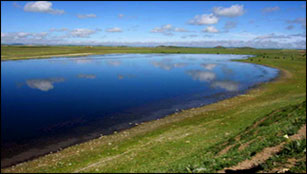
And as usual the pretty pictures too:
indexpicture1.jpg

Hindu Environmental Groups? I know that there are Indian Environmental Groups

But what about specific HINDU Environmental Groups?

First a note of clarification, Energy Tough Love (ETL) has been suffering from what our Web Diva calls bad code. ETL is more of an accumulator or an aggregator than an original poster. There is so much Energy/Environmental stuff out there that I just pick what interests me at the moment OR occassionally what is the hot topic of the day. We do original blogs on local issues but even then we usually “borrow” from our local newspaper – most notably Tim Landis – who does some of the best writing in the Springfield area and the AP. I have never had any problems with this approach from a production stand point in the 7 months that CES had issued this blog. We can debate the ethics of it over a beer…but besides sizing problems, the nuts and bolts of it has been fairly straight forward. That is until I got to this series on Religious based Environmental Groups…Right – go figure. One of the Muslim/Islam and one of the Jewish Websites had viruses embedded in them!!! Yah and I loaded them up to the blog.

It has taken Web Diva and me the last 5 days to get all of the yuck cleaned out and I am now studying each blog post by the coded line to make sure it doesn’t happen again.

On to the Hindu Environmental groups. Harvard is turning out to pretty much have cornered the market on Religion and The Environment…Why am I not suprised by that?

http://environment.harvard.edu/religion/religion/hinduism/projects/spirit_nature.html

and the requisite pretty pictures:

hinduism.jpg

Hindu Engaged Projects

Spirit in Nature (SpIN) Interfaith Path Sanctuary

pirit in Nature (SpIN) Interfaith Path Sanctuary is a non-profit organization that brings together people of diverse religious traditions to promote reverence and care for the earth. Through education, dialogue, and spiritual reflection in nature, SpIN seeks to awaken people to environmental problems, promote environmental action that is spiritually or religiously rooted, and provide a replicable model for engaging diverse religious traditions in caring for the Earth. Seeking to create an opportunity for people of diverse traditions to meet, meditate, walk, and worship in a setting that is conducive to spiritual reflection on nature, SpIN established a network of eleven “faith paths” in the foothills of the Green Mountains, near Ripton, Vermont. Nine of the paths represent different religions (Bahai, Buddhist, Christian, Hindu, Jewish, Muslim, Pagan, Quaker, and Unitarian Universalist), while the other two, including the children’s path, are inter-religious. The paths meet at a sacred circle, highlighting the interconnections between different religious traditions and between humans and the environment. SpIN encourages reflective walking along the paths, which are marked with “nature notes” indicating special points of interest in the natural surroundings. The paths have benches and quotes from each religious tradition about connecting with the earth. Located on seventy acres of land, the Vermont path center now has six to eight miles of paths with more than 6,000 feet of river and brook frontage. In addition to maintaining the paths, SpIN sponsors public events geared toward stimulating dialogue and action on behalf of the earth, such as its Bread and Soup Speaker Series, Earth Day Fair, discussion groups, guided walks and experiential activities at the path center. Each year SpIN publicly recognizes a person who has contributed to the connection of religion and ecology with its annual Eco-Spirit Award. “Spreading the Seeds” workshops are available for people interested in starting SpIN path centers at other locations, and the quarterly Spirit in Nature newsletter keeps readers informed about events, activities, and political issues related to religion and the environment. The Spirit in Nature Handbook, which contains information about SpIN and the Vermont path center, is available in print and on-line. At present, SpIN has more than 270 members nationwide, about one third of whom are not affiliated with any particular religious organization. New SpIN groups are forming in Boston and western Massachusetts; Norwich, Vermont; and Saratoga Springs, New York.

There is this Blogger:

http://kalyan98.wordpress.com/2008/03/13/setu-violation-of-environmental-protection-norms-and-coastal-peoples-livelihood/

Who sites this newspaper article:

http://www.livemint.com/sethusamudram.htm

Which cites this group:

COASTAL ACTION NETWORK

Contact Addresses

Jesu Rethinam, 546, Selva Prabha Complex, Public Office Road, Velippalayam, Nagapattinam – 611 001.                            

Ph: 04365 – 248674, Tele / Fax: 04365 – 248907; E-mail: coastalactionnetwork@rediffmail.com

Ossie Fernandes, No. 10, Thomas Nagar, Little Mount, Saidapet, Chennai – 600 015.Ph : 044 – 223 53 503, Fax : 044 – 223 55 905,

E-mail – hrf@xlweb.com,

hrf@md3.vsnl.net.in


Then there is this site if you want to get into the hardcore stuff

https://www.himalayanacademy.com/taka/past/2003/June/June_04_2003/

“To the Hindu the ground is sacred. The rivers are sacred. The sky is sacred. The sun is sacred. His wife is a Goddess. Her husband is a God. Their children are devas. Their home is a shrine. Life is a pilgrimage to liberation from rebirth, and no violence can be carried to the higher reaches of that ascent. While nonviolence speaks only to the most extreme forms of wrongdoing, ahimsa, which includes not killing, goes much deeper to prohibit the subtle abuse and the simple hurt. Rishi Patanjali described ahimsa as the great vow and foremost spiritual discipline which Truth-seekers must follow strictly and without fail. This extends to harm of all kinds caused by one’s thoughts, words and deeds–including injury to the natural environment. Even the intent to injure, even violence committed in a dream, is a violation of ahimsa. Vedic rishis who revealed dharma proclaimed ahimsa as the way to achieve harmony with our environment, peace between peoples and compassion within ourselves. The Vedic edict is: “Ahimsa is not causing pain to any living being at any time through the actions of one’s mind, speech or body.” Aum Namah Sivaya.”

Gurudeva

Then there is this report:

http://www.foe.org.au/media-releases/2002-media-releases/mr_25_11_02.htm

November 25, 2002

US Corportions fund Right-Wing

 Indian Hindu Groups

Hindutva, the Hindu supremacist ideology that has under girded much of the communal violence in India over the last several decades, has seen tremendous growth outside India over the last two decades. This report focuses on one US based organization–the India Development and Relief Fund (IDRF), which has systematically funded Hindutva operations in India. “The Foreign Exchange of Hate” establishes that the IDRF is not a secular and non-sectarian organization as it claims to be, but is, on the contrary, a major conduit of funds for Hindutva organizations in India

And if you want to CHAT it up well:

http://www.hindunet.com/forum/postlist.php?Cat=&Board=environmentalism

Sanatana Dharma

Weird Bird Friday – or TGI(WB)F as we say at Tough Love

http://www.perfectgreeting.com/index.cfm?action=view&id=11823

I could have got this picture at the above greeting card site…..But I Didn’t.. I really hate it when I can not attribute a photo so if you see this on the web let me know. It was forwarded to me by Harry Haynes a buddy in Madison so I will probably ask him where he got it.

I know its late but Easter came so early! It is just now getting to the point where the weather feels like Easter:

peeps.bmp

This as alway is a tribute to John and Susan who Blog about all things Denver
at their blog linked above. Few people know that they are life long Chicken Breeders who specialize in the rarer breeds of Asturian Painted Hens. They have raised several national champions. They report that they are good layers, too.